
Introduction
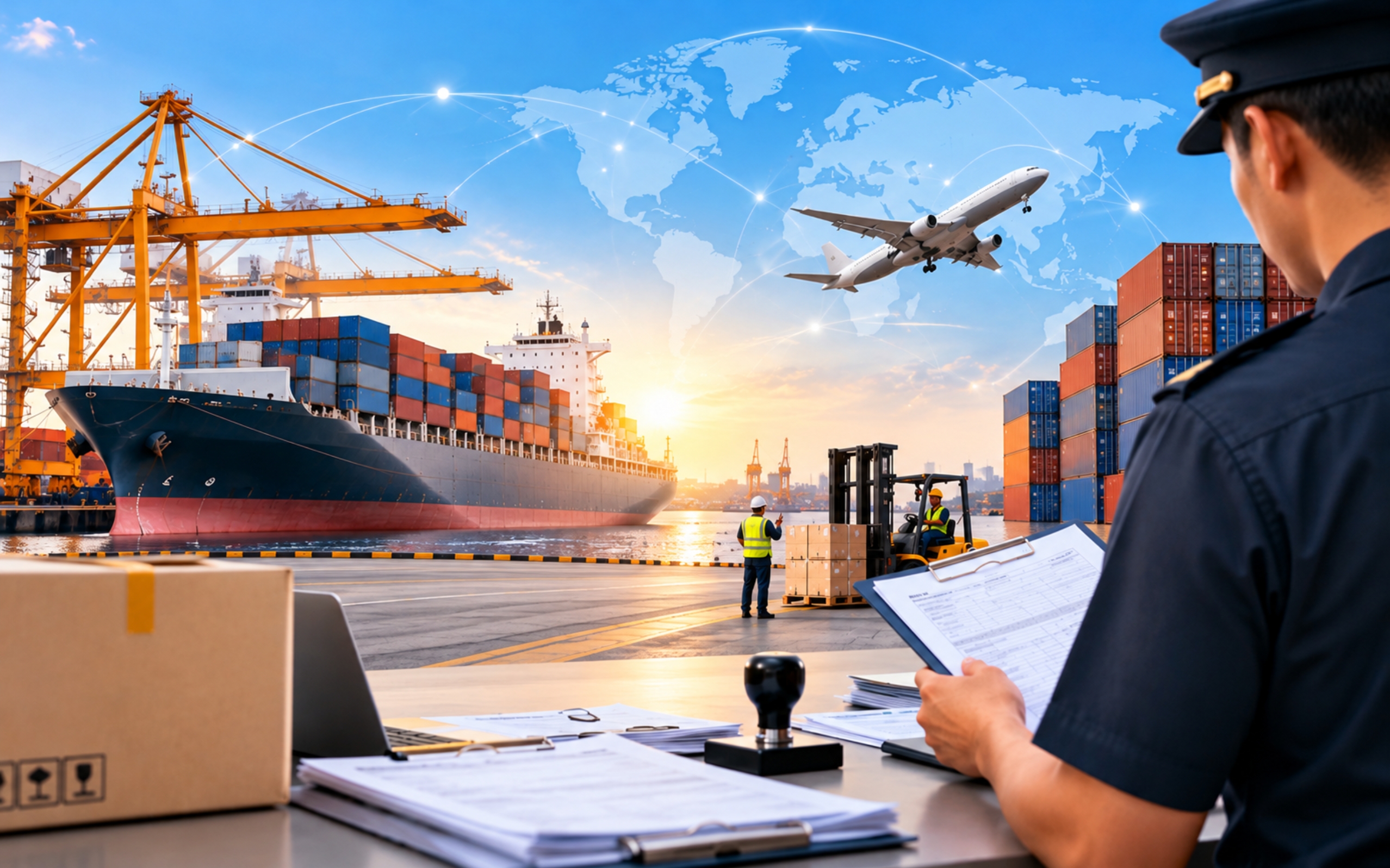
International trade involves more than moving goods from one country to another. Every import and export shipment must meet the applicable customs requirements, documentation standards and regulatory procedures before it can be released or dispatched.
For importers, exporters, manufacturers and trading companies, understanding customs clearance helps improve shipment planning, reduce avoidable documentation errors and coordinate cargo movement more effectively.
Customs clearance is also closely connected with international freight forwarding. While transportation moves cargo between locations, customs procedures ensure that shipments comply with the applicable requirements of the importing or exporting country.
This guide explains how customs clearance works, which documents businesses may need, what a customs house agent does, why shipments experience delays and how companies can prepare for smoother international cargo movement.
What Is Customs Clearance?
Customs clearance is the process through which goods are declared to the relevant customs authority and assessed for compliance with applicable import or export regulations.
Depending on the shipment, this process may involve submitting declarations, providing supporting documents, determining the applicable duties and taxes, obtaining required regulatory approvals, responding to examination or assessment requests, and completing the procedures necessary for cargo release.
The exact requirements depend on factors such as the country, product classification, country of origin, shipment value, applicable trade measures and the nature of the goods.
For businesses engaged in international trade, customs clearance is an essential part of shipment planning rather than a task that should be considered only after cargo reaches a port or airport.
How Does the Customs Clearance Process Work?
Although the exact process varies by jurisdiction and shipment type, the following stages provide a practical overview.
1. Review the Shipment and Applicable Requirements
Before shipping, the importer or exporter should identify the nature of the goods, their classification, the countries involved, the transaction value and any applicable restrictions or regulatory requirements.
Some products may require additional licences, permits, certificates or approvals. Identifying these requirements early helps reduce the risk of avoidable delays after the cargo arrives.
2. Prepare the Required Customs Documents
Accurate documentation is fundamental to customs clearance. The information in the commercial invoice, packing list, transport documents and customs declaration should be consistent.
Differences in product descriptions, quantities, values, weights or other shipment details may lead to clarification requests or additional checks.
3. Submit the Applicable Import or Export Declaration
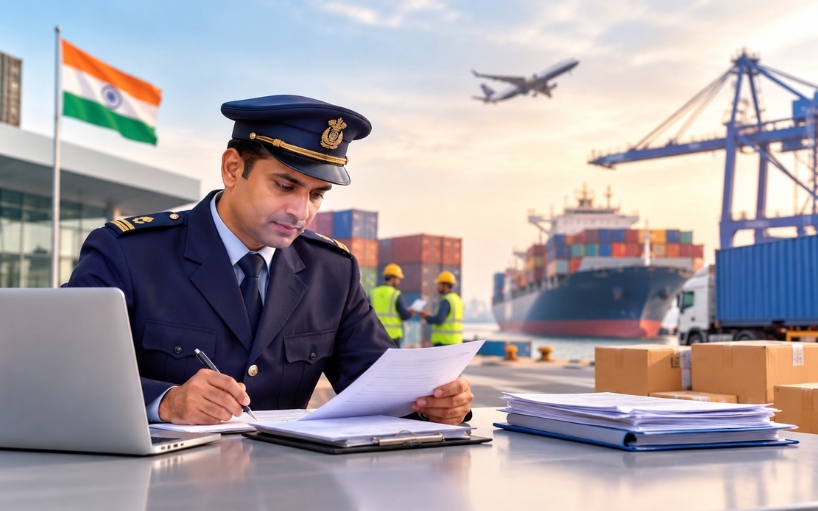
The relevant customs declaration must be filed through the applicable process or electronic system. In India, import and export declarations are handled through the customs framework administered by the Central Board of Indirect Taxes and Customs (CBIC), including the relevant electronic filing procedures.
The declaration should accurately reflect the goods and transaction. The required filing, supporting documents and responsible parties depend on the particular shipment and applicable regulations.
4. Customs Assessment and Verification
Customs authorities may review the declaration and supporting records to verify the shipment details and determine the applicable treatment under customs rules.
Depending on the shipment, this may involve checking the classification, assessable value, origin, duty treatment or compliance with other requirements. Customs authorities may also select cargo for examination or request additional information.
Not every shipment follows an identical verification path.
5. Payment of Applicable Duties and Taxes
Where duties, taxes or other charges are payable, the relevant amounts must be determined and paid in accordance with the applicable procedures.
The amount payable depends on factors such as product classification, customs valuation, origin, applicable exemptions and trade measures. Businesses should avoid relying on a generic duty estimate without checking the rules relevant to their specific goods.
6. Customs Release and Cargo Movement
Once the necessary procedures and requirements have been completed, customs release can be granted according to the applicable process.
The cargo can then proceed through the relevant port, terminal, airline, shipping line, transport provider or delivery arrangement, subject to any outstanding carrier, terminal or regulatory requirements.
Customs release and physical delivery are related but separate milestones. Cargo may still require terminal processing, payment of applicable handling charges, transport arrangements or other release formalities before it reaches its destination.
Documents Required for Customs Clearance
The documents required for a shipment depend on the goods, transaction, transport mode and destination country. Common documents include the following.
Commercial Invoice
The commercial invoice records important transaction details, including the seller, buyer, goods description, quantity, unit price, total value and relevant commercial terms.
Clear product descriptions and consistent values help support the customs declaration and valuation process.
Packing List
A packing list provides details about the shipment’s packaging, number of packages, contents, weights and dimensions where applicable.
It helps the parties involved verify the physical cargo against the accompanying documentation.
Bill of Lading or Air Waybill
A bill of lading is commonly associated with sea freight, while an air waybill is used for air cargo. These transport documents contain shipment and transportation information required by the relevant parties.
The document and its role depend on the transport arrangement and applicable procedures.
Import or Export Declaration
The appropriate customs declaration contains information about the goods and transaction that customs authorities require for processing the shipment.
In India, the applicable declaration and filing requirements depend on whether the shipment is an import or export and the nature of the goods.
Certificate of Origin
A certificate of origin may be required to establish the origin of goods. It can be relevant to preferential tariff treatment, trade agreements or other origin-related requirements, depending on the circumstances.
Licences, Permits and Regulatory Certificates
Certain products may be subject to additional requirements under the applicable laws and regulations. Depending on the goods, these may include licences, permits, inspection certificates or approvals from the relevant authorities.
Additional Supporting Documents
Other records may be needed depending on the shipment, such as insurance documents, product specifications, purchase orders, technical literature or evidence supporting the declared value and classification.
Important: This is a general document checklist, not a universal list of mandatory documents. Importers and exporters should confirm the current requirements for their particular goods, trade route and transaction before shipping.
What Is the Role of a Customs House Agent or CHA Agent?
A Customs House Agent (CHA) is a commonly used industry term in India for a professional or organisation involved in facilitating customs-related clearance work on behalf of importers and exporters.
The applicable regulatory framework, authorisation and professional terminology should be verified for the particular service arrangement. Businesses should ensure that the person or entity undertaking regulated customs work has the required authorisation.
Depending on the agreed scope and applicable requirements, customs clearance support may include:
- Reviewing shipment documents for completeness and consistency.
- Coordinating the preparation and filing of customs declarations.
- Assisting with applicable customs procedures and documentation.
- Coordinating responses to requests for information or supporting records.
- Liaising with relevant parties regarding assessment, examination and release formalities.
- Coordinating with freight forwarders, carriers, transport providers and other shipment stakeholders.
A customs clearance professional does not replace the importer’s or exporter’s responsibility to provide accurate information and comply with applicable laws. Businesses should establish who is responsible for each declaration, payment, document and approval before the shipment proceeds.
Common Reasons for Customs Clearance Delays
Customs delays can arise from documentation issues, regulatory requirements, verification procedures or operational factors. Understanding the common causes helps businesses plan more realistically.
Incomplete or Inconsistent Documents
Differences between the invoice, packing list, transport documents and declaration can lead to requests for clarification.
How to reduce the risk: Check names, product descriptions, quantities, weights, values and shipment references before documents are submitted.
Incorrect Product Classification
The classification of goods affects how customs requirements and applicable duties are determined. An incorrect classification can result in reassessment, additional documentation or other compliance consequences.
How to reduce the risk: Review the appropriate tariff classification using the product’s actual characteristics and applicable customs rules. Seek qualified advice where classification is uncertain.
Customs Valuation Questions
Customs authorities may seek further information when the declared value or supporting transaction records require clarification.
How to reduce the risk: Keep commercial invoices, purchase records, payment evidence and other relevant documents available, where applicable.
Missing Licences or Regulatory Approvals
Some goods are subject to product-specific restrictions or approvals. Discovering these requirements only after shipment can complicate the clearance process.
How to reduce the risk: Confirm the applicable import or export requirements before cargo is dispatched.
Examination or Additional Verification
Customs authorities may select shipments for examination or request further information. These procedures can affect release timelines even when the initial documentation has been prepared.
How to reduce the risk: Ensure that the cargo and its supporting documents accurately represent the shipment, and respond promptly to legitimate requests.
Poor Coordination Between Shipment Stakeholders
A shipment can experience operational delays when the importer, exporter, customs professional, carrier and transport provider do not have the information needed to coordinate their respective responsibilities.
How to reduce the risk: Assign clear responsibilities, share the required documents early and communicate changes to shipment details promptly.
No service provider can guarantee that every shipment will be cleared within a fixed period because processing depends on the shipment and the relevant authorities.
How Customs Clearance Connects With Freight Forwarding Services
Customs clearance and freight forwarding are different functions, but they need to work together for international shipments to move efficiently.
Freight forwarding involves coordinating the movement of goods through transport arrangements and related logistics activities. Customs clearance focuses on completing the applicable customs procedures and documentation.
For example, an import shipment may require international sea or air transportation, customs documentation, assessment and release procedures, port or terminal coordination, and inland transportation to the final destination.
If these activities are planned separately without clear communication, a shipment may face avoidable coordination issues, storage costs or delays.
Integrating customs coordination with the wider logistics plan helps businesses manage shipment milestones, document availability and cargo movement more effectively.
The exact responsibilities should be agreed in advance because freight forwarding and customs clearance may be provided by different parties, depending on the service arrangement.
Import Customs Clearance vs Export Customs Clearance
Import and export customs procedures serve different purposes, and businesses should plan for each side of the transaction.
Import Customs Clearance
Import clearance generally involves declaring incoming goods, providing the required supporting documents, addressing applicable assessment or verification requirements, paying relevant duties and taxes where payable, and completing the procedures required for release.
The importer should confirm the product’s admissibility, applicable regulatory requirements and documentation needs before dispatch.
Export Customs Clearance
Export clearance generally involves submitting the required export declaration, providing supporting documentation and completing the procedures applicable to the goods and destination.
Depending on the shipment, exporters may also need to consider product-specific permissions, origin documentation, export incentives or restrictions, and requirements associated with the destination market.
For shipments involving multiple countries or transport legs, both import and export requirements should be considered as part of the overall logistics plan.
How Businesses Can Prepare for Smoother Customs Clearance
A structured pre-shipment process can help reduce avoidable errors and improve coordination.
Before dispatch:
- Confirm the product classification and applicable trade requirements.
- Check whether the goods require licences, permits or additional certificates.
- Prepare accurate commercial and transport documents.
- Confirm the declared value, quantities, origin and product descriptions.
- Identify who will prepare and submit the relevant declarations.
- Agree on communication responsibilities and document-sharing arrangements.
- Plan for customs processing, cargo release and onward transportation.
During clearance:
- Keep supporting documents accessible.
- Respond promptly to legitimate requests for clarification.
- Coordinate with the relevant customs and logistics stakeholders.
- Track customs release separately from carrier and terminal release requirements.
- Confirm that the next transportation stage is ready when cargo becomes available.
These practices cannot eliminate every delay, but they help businesses identify potential issues earlier and manage international shipments with greater visibility.
Choosing Customs Clearance Support for Your Business
When evaluating a customs clearance provider, businesses should look beyond price alone. The suitability of a provider depends on the nature of the goods, trade routes, documentation requirements and the level of coordination needed.
Consider the following questions:
- Does the provider understand the type of cargo and trade route involved?
- Can it explain the applicable documentation and clearance responsibilities?
- Are the service scope, charges and exclusions clearly communicated?
- Is there a reliable process for handling document queries and shipment updates?
- Can customs coordination be integrated with the wider transportation and logistics plan where required?
- Are the appropriate authorisations and professional arrangements in place for the work being undertaken?
Clear communication and well-defined responsibilities can help reduce confusion throughout the shipment lifecycle.
Conclusion
Customs clearance is a critical part of international trade because shipments must meet the applicable customs and regulatory requirements before they can be released.
Accurate documentation, early identification of product-specific requirements, appropriate classification and valuation, and effective coordination between shipment stakeholders can help reduce avoidable delays.
For importers and exporters, customs clearance should be planned alongside international transportation, cargo handling and final delivery rather than treated as an isolated activity.
SMTP Global Logistics supports businesses with freight forwarding and logistics coordination. Businesses planning an international shipment can explore the company’s relevant customs clearance and freight forwarding services to understand the available support and agree on the requirements for their cargo.

3 Comments
Playing here has quickly become my favorite way to relax after a long day. The interface is so intuitive that I never feel overwhelmed and the rewards actually go the distance. It feels like the whole team is working hard to make sure every session is a hit. Trust me you need to check this out. trbetkom
Hey there fellow players from Quito and across Ecuador. I have been exploring different spots for a while and I just had to share this hidden gem with you all. The interface runs so smoothly and the live dealer options keep me coming back every single night. You will definitely feel right at home here. onlinegambling
Just found this spot and honestly the interface is so smooth. Deposit went through in no time and I snagged a nice bonus on my favorite slots. Definitely adding it to my regular rotation. Check it out here jdbaklogin